
Weaving Heritage into Contemporary Fashion: Reflecting on My Himroo Collection
Created by Janhavi Vivek Rampalliwar

The project story
The shuttle moves back and forth, back and forth, and somewhere in that rhythm a story is being written into cloth, one that started generations ago and is still being told. That's what struck me first, standing at the loom in Chhatrapati Sambhajinagar, watching a fabric I'd long admired for its visual richness reveal itself as something far more layered: a living record of skill, patience, and inherited knowledge.
That visit became the starting point for a collection I built around a simple question: how do you design with a heritage textile, rather than simply on it?
Meeting the Weave
Before this project, I knew Himroo the way most people do, as a beautiful, luxurious fabric. It wasn't until I visited Himroo Fabrics and spent time with Mr. Faisal Quraishi, a sixth generation weaver whose family has spent generations preserving this craft, that I understood what sits behind every metre of it.
Sitting beside the loom, I watched how much of the process still depends on the weaver's hands and instinct, how a single motif takes shape thread by thread, with no shortcuts and no room for impatience. Mr. Quraishi spoke about the craft the way you'd speak about family, with quiet pride and a clear sense of responsibility for carrying it forward. That conversation stayed with me long after I left the workshop.
Watching the process firsthand changed how I saw the fabric entirely. It stopped being a material I would design onto, and became something I needed to design around, a collaborator, almost, with its own logic and character.
Letting the Research Lead
My research went beyond the loom. I traced Himroo's history, studied its motifs, analysed its texture and drape, and looked at how heritage textiles are positioned in fashion today.
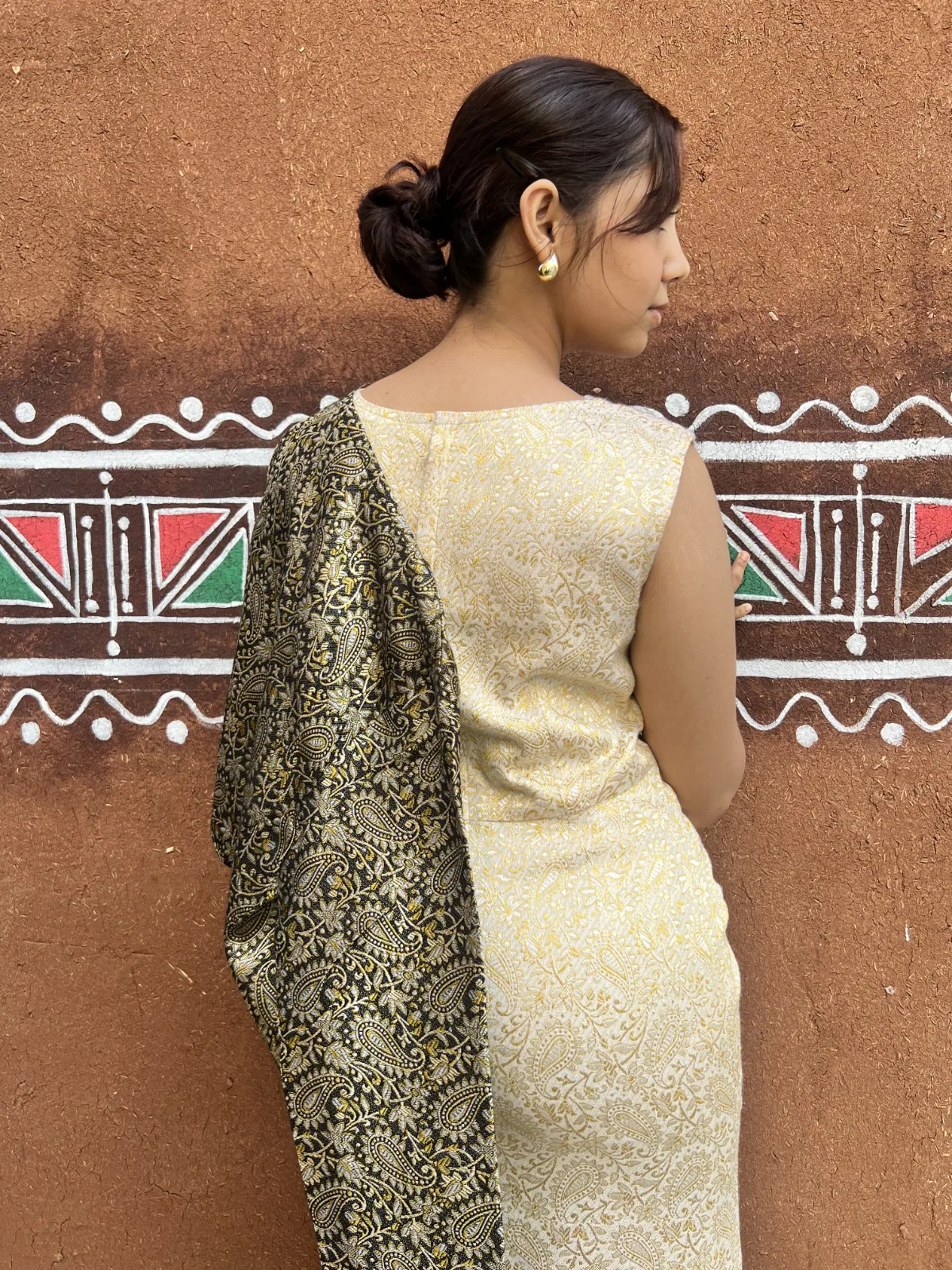
One thing that shaped my decisions early on was how the weave itself creates movement and depth through its motifs, so any print or embellishment placed on top of it risks flattening what the fabric is already doing on its own. That observation became a guiding rule for the collection: let the fabric's own pattern set the pace, and design the silhouette to support it rather than surround it with distraction.
That research became the foundation for every choice that followed, not a preliminary step, but the actual starting point of the design process.
Designing Without Overwhelming the Fabric
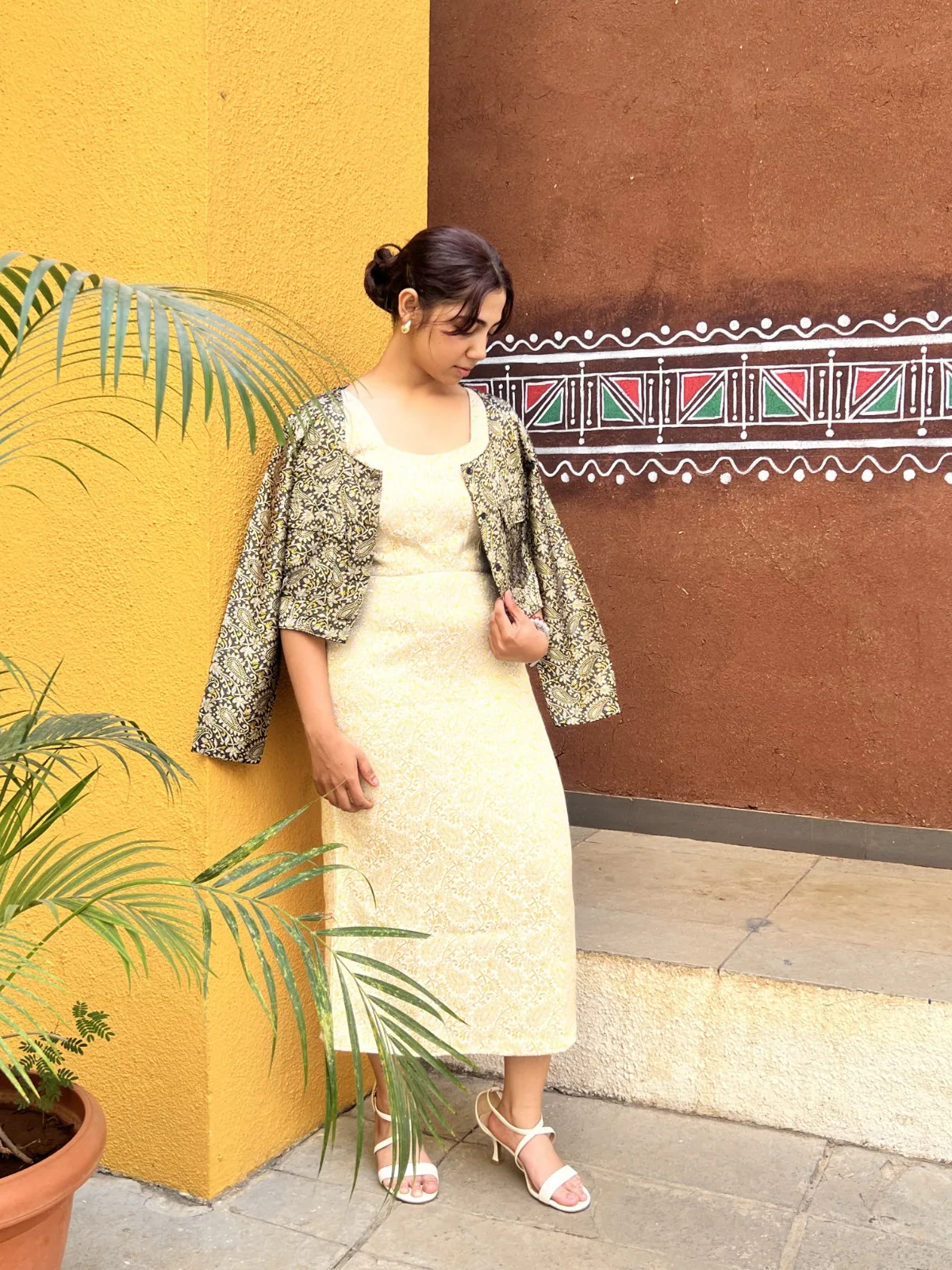
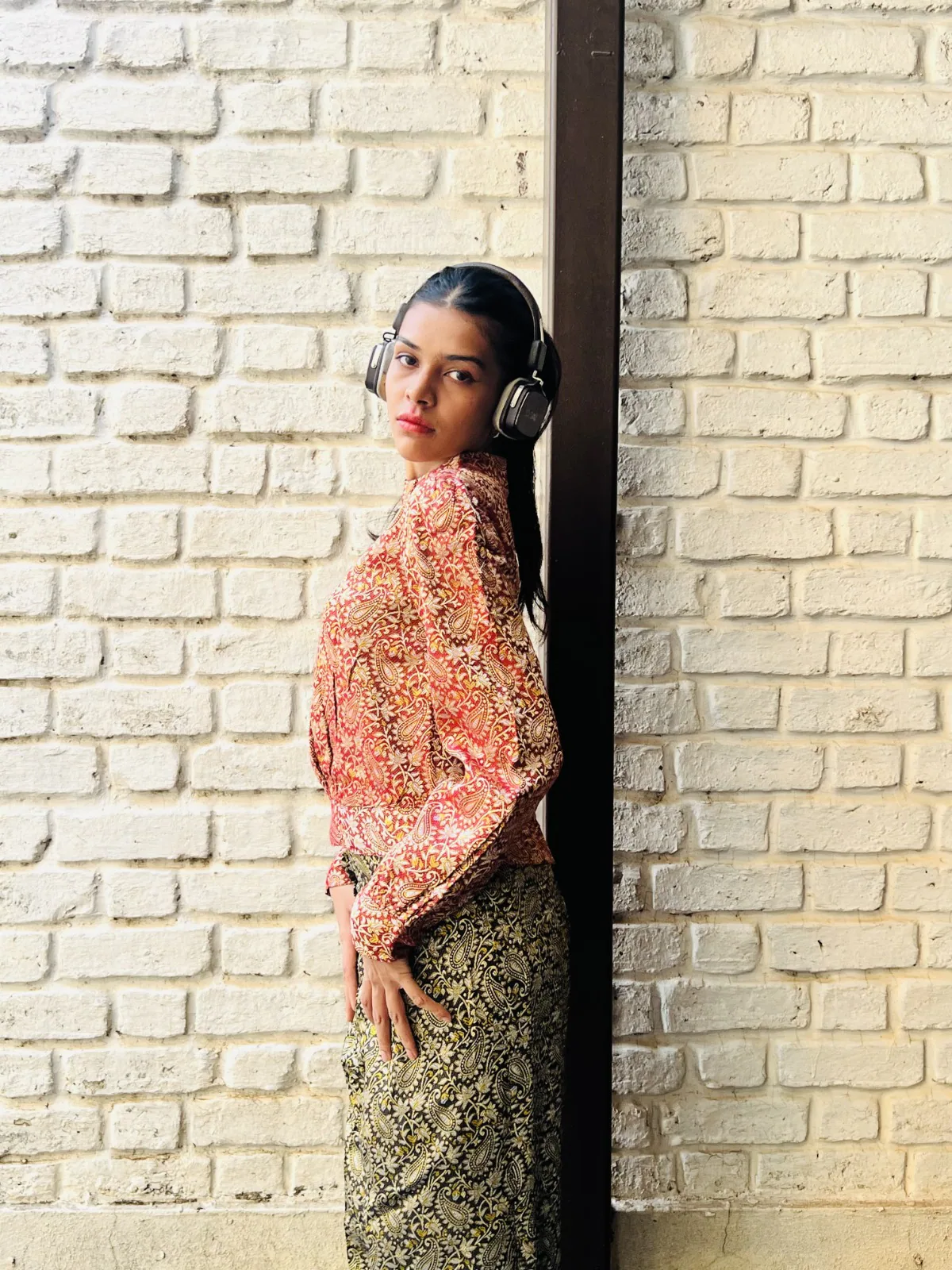
The biggest discipline of this collection was restraint. Himroo doesn't need embellishment to make a statement, it already carries one in its weave. So instead of layering onto it, I built the collection around letting it lead: contemporary silhouettes, clean construction, and considered fabric placement that let the woven pattern stay the visual highlight.
The strongest pieces in the collection were the ones with the simplest construction, clean lines that gave the eye nowhere to go but the weave itself. That became the real test for every design decision: strip away anything that didn't let the fabric speak.
Every stage, sketching, colour studies, silhouette experimentation, material selection, pattern development, construction, came back to the same question: does this celebrate the textile, or compete with it?
From Ceremonial to Everyday
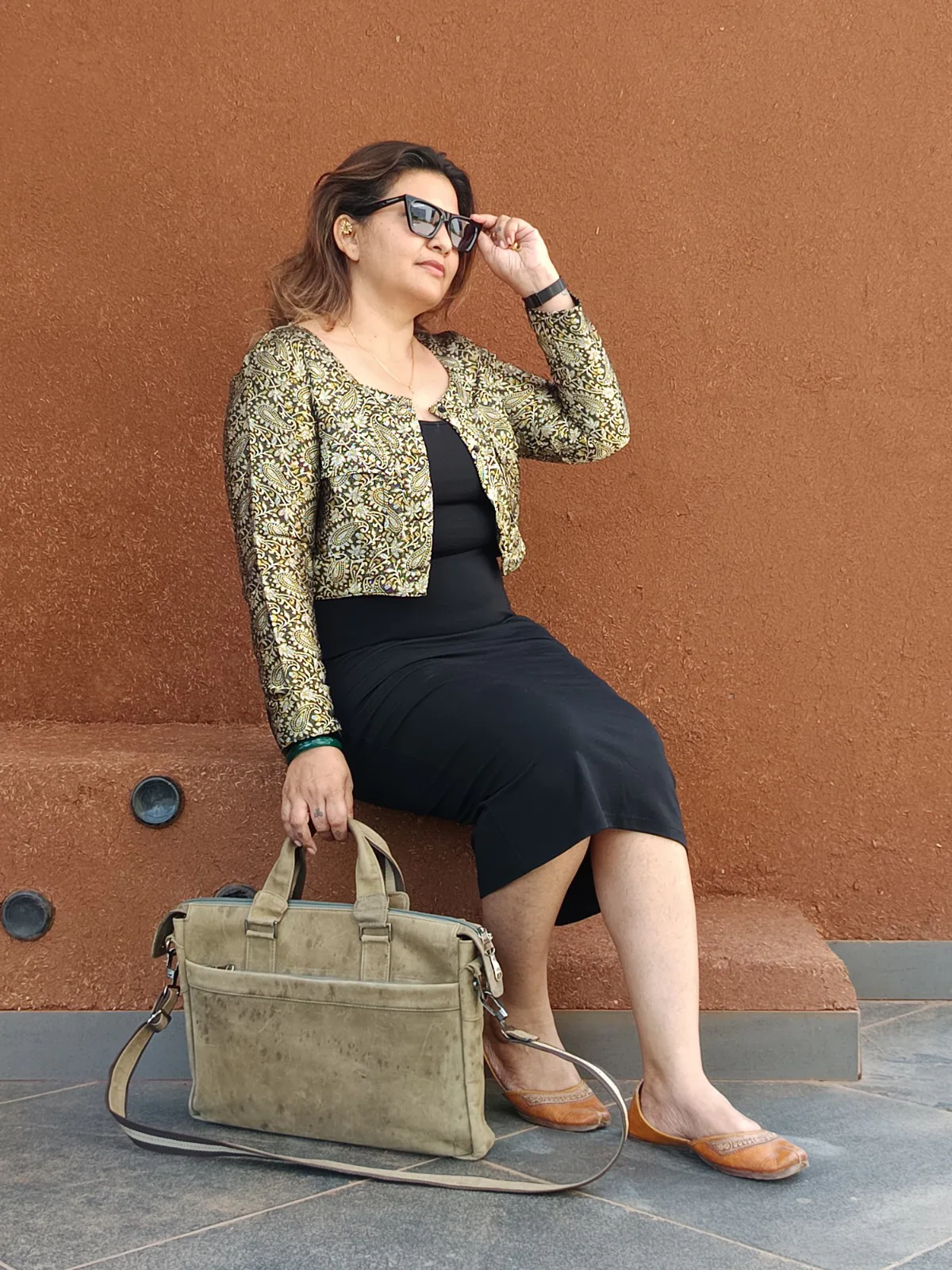
Heritage textiles like Himroo are often kept for ceremonial wear, treated as something too precious for daily life. Part of what this collection tried to do was loosen that boundary a little, to show that with the right design intervention, a fabric this rich can sit comfortably in a modern wardrobe without losing what makes it culturally significant.
That, to me, is the real work of design: not choosing between tradition and modernity, but finding where they can coexist.
What This Collection Taught Me
More than a set of garments, this project was a lesson in listening: to the material, to the maker, and to the story behind the craft. Every conversation with an artisan, every observation at the loom, every prototype added something I couldn't have arrived at from a desk.
It reaffirmed what I want my design practice to stand for: work that's rooted in research, driven by empathy, and shaped by the people who keep these crafts alive.
Himroo will always be, for me, proof that heritage textiles don't need to be frozen in tradition to stay meaningful. They just need designers willing to listen first.
Selected looks
Inside the collection
A closer view of the material, silhouette and details that shaped the project.
Created by our members
Your work deserves a considered audience.
Join Stitchli Society to share your practice, meet collaborators and grow within the fashion community.
Join the Society→